
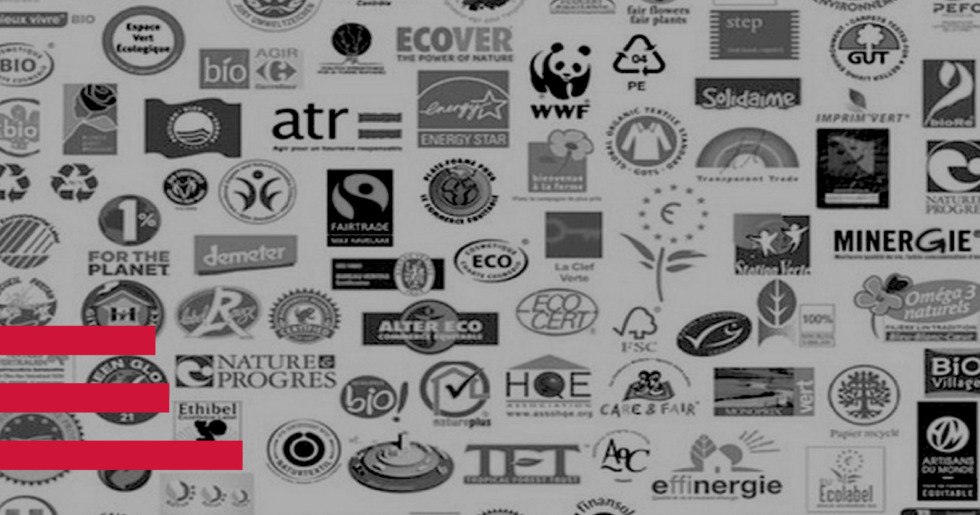
The Label Brand Megatrend
Market Context
Sustainability has become one of the defining megatrends of our time.
Consumers, investors, governments, and employees increasingly expect organizations to demonstrate responsible business practices and contribute positively to society and the environment.
As a result, sustainability has become a powerful market driver—and a significant source of competitive advantage.
The Downside of Success
The success of this megatrend has also created unintended consequences:
- The proliferation of vague sustainability claims designed primarily to stimulate sales.
- The multiplication of labels and certifications that do not necessarily correspond to environmentally responsible products, services, or business practices.
- The rise of greenwashing, where organizations claim sustainability credentials without meaningful commitments or measurable impact.
As a result, many labels have lost credibility and consumers are increasingly questioning their legitimacy.
Yet Labels Matter More Than Ever
Despite these challenges, sustainability certifications and label brands represent far more than marketing tools.
They embody emerging models of governance for businesses, institutions, industries, and society as a whole.
They provide a framework for accountability, continuous improvement, and transparency.
Increasingly, they are becoming a prerequisite for market access, investment attractiveness, and long-term competitiveness.
Consider the real estate sector: it is widely accepted that properties that fail to meet modern energy-efficiency standards can lose up to 30% of their market value.
The same logic increasingly applies to businesses and brands.
A New Awareness of Responsibility
Labels and certifications are the result of a structured process—or at the very least, a clearly defined set of criteria that organizations commit to respecting.
Beyond compliance, certification often becomes a catalyst for transformation.
It places collective and individual responsibility back at the center of business decision-making.
Organizations can no longer outsource responsibility to suppliers, subcontractors, or external stakeholders.
Every action has an impact on the broader system.
Commitment must therefore be global.
Certification encourages organizations to adopt a continuous improvement mindset, making them more efficient, resilient, and dynamic over time.
Labels and Certifications: What’s the Difference?
Certification
Certification is a quality assurance process that evaluates an organization against predefined standards.
It is typically reviewed and renewed every two or three years through independent audits and continuous improvement requirements.
Label
A label is a registered trademark or seal that confirms compliance with a specific set of standards.
A label represents a legal commitment and serves as a visible sign of trust for customers, investors, and stakeholders.
A label generally takes one of two forms:
- A certification mark officially registered as a trademark and governed by certification criteria.
- A registered collective or combined trademark supported by a documented set of requirements that organizations must meet to obtain and retain the label.
Governance of a Label Brand
To maintain credibility, certification and label management should be clearly separated.
Best practices generally require:
- An independent certification body responsible for evaluation.
- A separate organization responsible for granting and managing the label.
This separation helps ensure transparency, impartiality, and trust.
For example:
The Max Havelaar Foundation grants the Fairtrade label to certified companies and products, while independent certification organizations verify compliance with Fairtrade standards.
The International Label Jungle
Today’s sustainability landscape is increasingly complex.
- More than 200 internationally recognized sustainability labels coexist globally.
- Approximately 25% of them are regularly challenged regarding the robustness of their sustainability claims.
- Thousands of additional local and regional labels exist worldwide, many of which lack professional governance structures or meaningful environmental commitments.
This abundance of labels often creates confusion rather than clarity.
The challenge is no longer creating labels—it is building credible ones.
The Swiss Label Landscape
Switzerland currently counts hundreds of recognized labels, and the number continues to grow.
These labels generally fall into two major categories:
Territorial Labels
Territorial labels promote a region, canton, city, or geographical area.
They often support local economic development, tourism, agriculture, and regional identity.
Because they are closely linked to public institutions and regional stakeholders, they frequently enjoy strong institutional credibility.
Industry and Professional Labels
Industry labels are typically developed by professional associations and sector organizations to promote quality, sustainability, ethical standards, or best practices.
A well-known example is the Bio Suisse label, developed by the federation of Swiss organic producers and awarded to certified members who comply with its standards.
The Challenge of Label Proliferation
While the growth of labels demonstrates increasing awareness and commitment to sustainability, excessive fragmentation can become counterproductive.
Switzerland, like many countries, is experiencing a multiplication of regional and cantonal labels.
Not all are structured according to intellectual property best practices, which can create governance issues and undermine credibility.
When too many labels compete for attention, visibility decreases and stakeholder trust can erode.
The challenge is therefore not quantity, but quality, governance, and recognition.
Learning from the Success of B Corp
One of the most successful label brands in the world today is the B Corp movement.
Its success provides valuable lessons for any organization seeking to build a strong label brand.
B Corp has achieved:
- Exceptional visibility
- A globally recognized positioning
- Strong credibility
- A powerful international network
- A highly engaged community
Most importantly, B Corp understands that a brand is a living asset that must continuously evolve, engage, and create value for its stakeholders.
Key Success Factors for a Territorial Label Brand
Creating a successful label brand requires much more than designing a logo or defining a set of criteria.
Success depends on several critical factors:
Clear Brand Positioning
The label must define:
- Its mission
- Its purpose
- Its values
- Its scope of action
- Its long-term vision
Member Value Proposition
The benefits for participating organizations must be explicit.
Every member should clearly understand:
“What’s in it for me?”
Strategic Roadmap
The label must be supported by measurable objectives, a clear strategy, and a structured action plan.
Radical Transparency
Trust depends on complete transparency regarding governance, criteria, evaluation processes, and performance.
Legal Protection
The label should be protected through a properly registered certification mark or trademark.
Independent Certification
Certification bodies must operate independently and apply consistent standards.
For territorial labels, certification criteria should combine general sustainability requirements with region-specific objectives and priorities.
Conclusion
Labels and certifications have become powerful strategic assets.
They help organizations structure their commitments, strengthen credibility, engage stakeholders, and create long-term value.
However, their future success will depend less on the number of labels created and more on the quality of their governance, transparency, legal foundations, and ability to build trusted communities.
In the emerging economy, the most successful labels will not simply certify compliance.
They will become true Brand-Driven ecosystems, capable of aligning organizations, institutions, businesses, and citizens around a shared vision of value creation and positive impact.